A Roll Of Thunder From The Void von Martin Boord (Rig-’dzin rdo-rje)

A Roll Of Thunder From The Void

Vajrakila texts of the Northern Treasures Tradition
Volume Two

by Rig-’dzin rdo-rje (Martin J Boord)

This important collection of teachings from the Northern Treasures Vajrakila cycle includes liturgical practice texts (sadhana) from the original treasure revelations, together with explanatory notes and commentaries by the 17th century master Padma ’phrin-las on how to take these practices into a closed retreat and employ them for the highest benefit of oneself and all living beings.  Having become empowered in the mandala of Vajrakila by a master guru, trainees may use the skilful esoteric techniques, described herein, in order to develop a profound experiential certainty of the true nature of reality.  These texts are manuals, designed to be studied by disciplined individuals who wish to train themselves in skilful altruism.  They are traditional methods for overcoming the instincts of egoistic self-interest, allowing the mind to become focussed on the general welfare of the world, so that beneficial changes of great social value may be brought about in both thought and behaviour.

Painstakingly researched and annotated, this volume includes English translations of eight important texts, together with much of the original Tibetan.

Within the instructions for the preparation and protection of the retreat area are hitherto unpublished details of the means to suppress the various classes of afflicting demons (sri) that are potential causes of downfall for all tantric yogins.  This is an ancient and vital aspect of vajrayana ritual practice that has been much neglected until now.

edition khordong at Wandel Verlag, Berlin, 2010, 432 pages, 3 illustrations, English and Tibetan, sewn pages, hard cover, 15 x 22 cm, 49€, published on 15th of December 2010, ISBN: 978-3-942380-05-8

Rig-’dzin rdo-rje (Martin Boord) studied with Lama Khamtrul Yeshe Dorje, Chhimed Rigdzin Rinpoche and Dudjom Rinpoche.  At the university of London he received a doctorate for his thesis “The Cult Of The Deity Vajrakila.”  Currently he lives with his wife in Oxford, devoting himself to the study of the Northern Treasures. More information about Martin Boord you will find here: http://www.khordong.de/Engl/Teachers/martinboord.html

Further books in this series of the Vajrakila texts of the Northern Treasures Tradition (Byang-gTer Phur-Pa) are planned:

Vol.1  Gathering the Elements A detailed study of the Vajrakila tradition, looking at its origins, significance and lines of transmission, as well as a history of the Northern Treasures (Byang-gter) school and an overview of the approximately 200 available texts of Vajrakila that it maintains.  This book is a new and completely revised edition of the study formerly published as The Cult of the Wrathful Deity Vajrakila, incorporating the latest research on the subject and freshly translated material.

Vol.2  A Roll of Thunder from the Void Including ritual practice texts (sadhana) from the original treasure revelations, together with explanatory commentaries by the master Padma ‘phrin-las on how to employ these practices for the highest benefit of oneself and all living beings.  Within the instructions for the preparation and protection of sacred space are details of the means to suppress the various classes of afflicting demons (sri) that are potential causes of downfall for all tantric yogins. See above.

Vol.3  A Blaze of Fire in the Dark Rituals for fire sacrifice (homa), traditionally performed at the end of a retreat, and rites of empowerment (abhiseka).

Preview:
Titel+Table of Content as PDF (94kB), Download: roll_1
Titel+Content+Introduction as PDF(238kB), Download: roll_2

Filed under English books |

Die Geheimen Dakini-Lehren - Padmasambhavas mündliche Unterweisungen der Prinzessin Tsogyal

Sorry, this entry is only available in Deutsch.

Filed under German Books, New Publications |

Das Gebet in sieben Kapiteln gelehrt von Padmasambhava aus Urgyen (Le’u bDun Ma)

Sorry, this entry is only available in Deutsch.

Filed under German Books, New Publications, Praxisbooks |

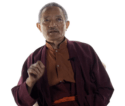
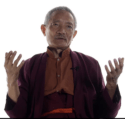
Dr. Martin J. Boord (Rig-’dzin rdo-rje)

As one of Rinpoche’s senior students, Martin Boord is well known already to many people within the Khordong sangha.

Visiting India and Nepal as a teenager in 1967, Martin became a devoted Buddhist and immediately embarked on the study of Sanskrit in order to read the original texts. Receiving teachings from many of the great Tibetan masters of all schools who had become settled in India following the takeover of their country by Chinese communists, he studied the doctrines of both sūtra and tantra. Over the years, he carefully surveyed the entire Buddhist Tripiṭaka with the lamas of Tibet before immersing himself fully in the guhyamantra practices of the Nyingma school under the guidance of H.H. Dudjom Rinpoche and Lama Khamtrul Yeshe Dorje, the renowned “weather man” of the Dalai Lama in Dharamsala. It was whilst on a pilgrimage with Yeshe Dorje to Sarnath in 1973 that Martin first met with the Khordong Terchen Tulku, Lama Chhimed Rigdzin, with whom he immediately began to form a close bond of attachment.

Subsequently, Martin invited Lama Chhimed Rigdzin to Great Britain in order to inaugurate his new Dharma Centre, granting empowerments and teaching the Byang-gter Dorje Phurpa (Northern Treasures Vajrakīla) for the first time in the west.

Later, moving from Europe back to India, this master and disciple together translated a number of Byang-gter texts, including hundreds of pages of Vajrakīla Sādhana (practice texts), which have remained the major focus of Martin’s life.

Taking the Byang-gter Phurpa as his theme, Martin went on to study at the School of Oriental & African Studies at the University to London, for which he was awarded a BA in Religious Studies (Buddhism), followed by the degree of Doctor of Philosophy in 1992. His doctoral thesis was subsequently published as The Cult of the Deity Vajrakīla, by the Institute of Buddhist Studies, Tring, 1993.

Having completed his studies at SOAS, he was awarded a scholarship from the Stein-Arnold Exploration Fund which enabled him to return to India in order to research the sacred geography of Sikkim, one of the seven “hidden lands” of Rigzin Godem. This work was eventually published in the Bulletin of Tibetology.

Reading Sanskrit and Tibetan languages, as well as having studied Tibetan art for many years, Martin has acted as a consultant to the Ashmolean Museum, one of the oldest public museums in Europe, helping to identify and arrange their holdings of Tibetan cultural artefacts and paintings, and he continues to work on similar projects at different times when called to do so. The British Museum, for example, requested his assistance when they were offered a collection of Tibetan phurba for purchase, about which they had no specialist knowledge, and he has collaborated with the makers of documentary films for television, etc.

Having spent many years developing his understanding of the Dharma in meditation retreats, in 1998 Martin was invited by Lama Chhimed Rigdzin Rinpoche to accompany him as an assistant teacher on his European Dharma tour, in order to give teachings on the Deity Vajrakīla as part of the Pfauenhof retreat in Germany. This was so successful that the invitation was repeated in the following years, so that Martin again gave Vajrakīla teachings in Berlin in 1999 and he accompanied Rinpoche to Oxford, Wales and Vienna in the year 2000, where he taught many aspects of the Vajrayāna path, as well as his special subject — the deity Vajrakīla. Since then Martin has given innumerable teachings on many aspects of the Byang-gter tradition, throughout Europe and the USA.

He now lives and works in Oxford, pursuing his research interests with like-minded academics and Dharma practitioners at the Oriental Institute, reading manuscripts at the Indian Institute Library and working on an ad hoc basis as Academic Visitor with those studying for doctorates in Buddhist Studies, etc.

In recent years, he has completed a translation of the most illustrious commentary on Phurba practice, known as The Black 100,000 Words (Phur ‘grel ‘bum nag). This important text is a report of a group retreat that was undertaken by the three masters, Padmasambhava, Vimalamitra and Silamanju, in Nepal in the 8th century. It was transmitted in Tibet by Padmasambhava to Yeshe Tsogyal and the translation of this text is now available from edition khordong (published 2002). He has also expanded his work on the Northern Treasures texts to include further research on the Hidden Lands of Rigzin Godem, as well as the ritual cycle of the Greatly Compassionate Avalokiteśvara. His text on the Byang-gter funeral ceremonies of Avalokiteśvara will shortly become available from Wandel Verlag.

Martin’s youngest daughter Tara was recognised by Lama Chhimed Rigdzin Rinpoche as the reincarnation of the Northern Treasures yoginī, the Shukjung Khandro. Rinpoche’s full text of certification can be found here.

Summary of Publications:

Forthcoming (Editor) The Guhyagarbha Tantra and its Commentary Moonbeams, translated by Gyurme Dorje

Forthcoming Illuminating Sunshine: Buddhist funeral rituals of Avalokiteśvara

2011 Editor The Five Nails – A Commentary on the Northern Treasures Accumulation Praxis edition khordong by Wandel Verlag, Berlin 2011

2010 A Roll of Thunder from the Void 
(Vajrakīla texts of the Northern Treasures Tradition, Volume 2)

2010 (Index) Jokhang: Tibet’s most sacred Buddhist temple, Edition Hansjorg Mayer

2006 Meditations on the Great Guru Padmasambhava, Khordong Newsletter, Berlin

2006 Entering the Maṇḍala Gates, Tiger’s Nest Dharma Diary for 2007, Sussex

2005 Editor (Tibetan & Sanskrit) The Complete Tibetan Book of the Dead, translated by Gyurme Dorje, Penguin Books, London

2003 A Bolt of Lightning From the Blue, edition khordong, Berlin

2003 “The symbolism of the gCod drum, by ’Gyur-med blo-gsal” (English translation)
 in Dzogchen Journal, London

2003 “A Pilgrim’s Guide to the Hidden Land of Sikkim: Proclaimed as a Treasure by Rig-’dzin rgod-ldem” in Bulletin of Tibetology 39(1), Gangtok

1999 (with Stephen Hodge) The Illustrated Tibetan Book of the Dead, Thorsons, London

1998 A India, Pórtico do Norte Exhibition catalogue (contributor) Auditorio de Galicia, Santiago de Compostela

1998 “Maṇḍala Meaning & Method: Ritual delineation of sacred space in tantric Buddhism” in Performance Research Vol.3, No.3, Winter 1998, Routledge/ARC, London

1998 Editor (Tibetan) High Peaks, Pure Earth: Collected Writings on Tibetan History and Culture, by Hugh Richardson, Serindia Publications, London

1998 East Asian Books, Tibetan MSS, Catalogue 19, Sam Fogg Rare Books, London

1998 “Tibet” & “Mongolia” in Encyclopaedia of World Mythology, The Foundry Creative Media Company Limited, London

1996 Manuscripts from the Himalayas and the Indian Subcontinent, Tibetan MSS, Catalogue 17, Sam Fogg Rare Books, London

1996 (with Losang Norbu Tsonawa) Overview of Buddhist Tantra by Panchen Sonam Dragpa, Library of Tibetan Works and Archives, Dharamsala

1996 Maṇḍala Meaning & Method, Kailash Editions, London (unpublished)

1994 “Buddhism” in Sacred Space, edited by John Holm with Jean Bowker, Pinter Publishers, London, New York

1993 The Cult of the Deity Vajrakīla (Buddhica Britannica Series Continua IV), The Institute of Buddhist Studies, Tring 
This book is currently being reworked as Gathering the Elements (Vajrakīla texts of the Northern Treasures Tradition, Volume 1

1993 “Tibet and Mongolia” in World Mythology: The Illustrated Guide, Roy Willis, Simon & Schuster, London

NOTE from Martin: Over the years I have had many book reviews published in The Middle Way (journal of the Buddhist Society, London) and other such journals and, of course, I did a fair amount of work with C.R. Lama, the details of which I have forgotten. These include:

Padmasambhava’s teachings on the downfalls of tobacco
The Dragon Roar that fulfills all wishes (Protector text)
The Violent Storm of Meteoric Vajras (sādhana of rDo rje gro lod)
A Gentle Rainfall of Honey (sādhana of Guru mTshan brgyad)

Filed under Authors |

Tulku Tshulthrim Zangpo (Tulku Tsurlo) (1884-c.1957)

TSULTRIM ZANGPO (1884-c.1957)*

Tulku Tsurlo (Tshulthrim Zangpo)
Tsultrim Zangpo, also known as Tulku Tsurlo, one of the greatest Tibetan scholars of the last century, was an important student of Tertön Sogyal Lerab Lingpa, as well as the author of his secret biography and a lineage-holder of his terma teachings. He was also a student of the Third Dodrupchen Jikmé Tenpé Nyima and of Amye Khenpo Damchö Özer of Dodrupchen Monastery. Khenpo Damchö said of him on one occasion, “I am just a dog, but I have a lion for a student.” Although it was notoriously difficult to meet Dodrup Jikmé Tenpé Nyima in his later years, Tsurlo was able to do so because of his work as a scribe. He copied many texts for Dodrupchen Rinpoche’s personal library and used the work as an opportunity to get access to Rinpoche and to receive clarifications.

Tsultrim Zangpo’s father was Gonpo Wangyal and his mother was Shyiwam Tso, daughter of Khordong Terchen Nuden Dorje. His main residence was at Shukjung (shugs ‘byung) monastery in the Do Valley, which is located about 15 to 20 miles from Dodrupchen Monastery and which belongs to the Northern Treasures (Byang gTer) tradition. He also spent time at Khordong monastery, which was under the care of his younger brother, Gyurme Dorje.

Tsultrim Zangpo was a monk who upheld the Vinaya, as well as an accomplished tantric adept, and among his writings is a two-volume commentary on Ngari Panchen’s Ascertainment of the Three Types of Vows (sDom gSum rNam Nges), as well as several texts on Dzogchen, including an instruction manual (Khrid Yig) for the Gongpa Zangthal, which has been translated into English by Tulku Thondup#, and a commentary on the famous Prayer of Kuntuzangpo. His other writings include a commentary to Padmasambhava’s Garland of Views+ and many works related to the tantras of the New Translation tradition.

Those who saw him say that he looked statuesque, seated in meditation posture, hardly ever moving, and with an impressive white beard.

He was the root teacher of Khordong Tertrul Chhimed Rigdzin Rinpoche, popularly known as C.R. Lama (1922-2002), as well as Tulku Gyenlo and Zhichen Öntrul, who passed away recently in Tibet.

Footnotes:
* The birth year of 1884 is given in Tulku Thondup’s Masters of Meditation and Miracles. According to the Khordong website he died at the age of seventy-three. We know that he wrote the secret biography of Tertön Sogyal in 1942.
# This translation of the commentary to the Gongpa Zangthal is partly now available here The Five Nails – A Commentary on the Northern Treasures accumulation praxis.
+ The Garland of Views by Padmasambhava was translated by James Low and is available in his book Simply Being: Texts in the Dzogchen Tradition (Antony Rowe Publishing Services, 2010). Also available in French and German.

Filed under Authors |

The Five Nails – Commentary on the Northern Treasures Accumulation Practice by Tulku Tshulthrim Zangpo (Tulku Tsurlu)

The Five Nails

A Commentary on the Northern Treasures Accumulation Practice
by Tulku Tshultrim Tsangpo (Tulku Tsurlo)

The Five Nails (tib. gZer lNga) are the Northern Treasures (Byang gTer) accumulation practice (Ngöndro) which has to be practised before the Drubkor Nam Sum (tib. sGrub sKor rNam gSum), which consist of Drowa Kundrol (‘Gro Ba Kun Grol), the outer sadhana of Chenresig, who frees all beings (tib. Thugs rJe Chen Po ‘Gro Ba Kun Grol), the inner sadhana of Rigdzin Dungdrub (tib. Rig ‘Dzin gDung sGrub) and the secret sadhana of Thug Drub Dragpo Tsal (tib. Thugs sGrub Drag Po rTsal). The Five Nails are also the preparation for the Gongpa Zangthal cycle and other Byangter practices. Here we have a short commentary on the the accumulation practice by Tulku Tshultrim Tsangpo, one of the greatest Tibetan scholars of the last century and main teacher of Chhimed Rigdzin Rinpoche and others also known as Tulku Tsurlo.

86 pages, 15 x 22 cm, paperback, 13,80 €

About the book:
This commentary on the Northern Treasures accumulation practice, known as the «Five Nails» (tib. gZer lNga) contains the first chapter of the more lengthy commentary on the Gongpa Zangthal «The Boundless Vision of Dzogchen» by Tulku Tsurlo, translated by Ven. Tulku Thondup Rinpoche, 2001, and revised by Rev. Dr. Martin Boord (Rig-’dzin rdo-rje), 2008, for this publication, which was published at Choekhor Duechen, the Tibetan anniversary of Buddha’s first turning of the Dharma wheel, August 2011.

ISBN: 978-3-942380-12-6, edition khordong by Wandel Verlag, berlin, 2011, Paperback, 86 pages, 15 x 22cm, 13,80 €

How to get:
You can easily order the books through an eMail to mail (ad) wandel-verlag (dot) de or through the contact form. The books will be delivered with an appropriate invoice attached and as soon as available.  Advanced payment only.

Postage:
Postage inside Germany is included*.
For orders outside Germany:
Via surface “economy”, cost sharing*: 2 €
Via airmail “priority”, cost sharing*: 5 €
If you order more than one book, postage will be charged only once.
*) These shipments are unregistered without insurance. The risk of loss or damage is carried by the purchaser. For insurance and registered mail please add 2,05 € and note with your order. For orders above 50€ we will bear these expenses.

How to pay:
Please send your money (book(s) + postage) to:
Name: Wandel Verlag e.Kfm.
Bank: GLS
Account-No.: 1115428300
BLZ: 43060967
BIC: GENO DE M 1 GLS
IBAN: DE41430609671115428300

You can also send your money with credit card or bank collection via paypal. Please send it to: mail (ad) wandel-verlag (dot) de or ask for an invoice via paypal on the same eMail address. Inside the Euro area please prefer the EU/SEPA wire transfer which is without any costs.

In all cases send us a short note via eMail about your order, your payment, you choice of postage and your deliver address. Payment in advance only.

With your direct orders you support our small publication house. For further information do not hesitate to ask. For reseller or dharma centre rates please ask.

Sarwa Mangalam,
edition khordong by Wandel Verlag
Filed under German Books, English books, New Publications |

Illuminating Sunshine: Buddhist funeral rituals of Avalokiteśvara by Martin Boord (Rig-’dzin rdo-rje)

Apart from the prayers stemming from the well-known Tibetan Book of the Dead, there is a remarkable lack of ritual material available in the Western world for those who wish to perform a Buddhist funeral.

This gap has now been filled by a welcome new publication from Wandel Verlag, forthcoming fall 2011:

Illuminating Sunshine: Buddhist funeral rituals of Avalokiteśvara
translated by Martin Boord (Rig-’dzin rdo-rje)
with original artwork by Jamji Shiwah

According to our author Padma ‘phrin-las (1641-1718), disciple of the Great Fifth Dalai Lama and fourth incarnation of the gter-ston Rig-’dzin rgod-ldem, there are three main stages in the care of those who have come to the end of their lives.  These consist of facilitating the transference of consciousness (’pho ba) at the moment of death, performing postmortem rituals in order to guide the deceased along pathways of escape from the six modes of unhappy rebirth in saṁsāra, and cremating the corpse with due dignity. Associated rites include prayers of good wishes for the deceased to be reborn in the pureland of Amitābha’s Blissful Paradise (Sukhāvatī), and the casting of small votive images (tsha tsha) from any fragments of bone that may remain after the cremation has been completed.   Taken as a whole, such rites are designed to ensure that the good karma of the deceased is used to maximum effect so that he or she may be liberated from bondage to an endless cycle of confusion and pain, obtaining instead the three kāya of an awakened being.

All the relevant texts have been gathered together in the present volume, which thus contains a full set of instructions for those who find themselves called upon to care for the Buddhist dead.  Together with the Tibetan texts and English translations, this book contains transliterated prayers that may be chanted with greater ease on such solemn occasions, with full explanations of how to perform a full Buddhist funeral ceremony, by either burial or cremation.

May this work bring happiness and comfort to the living, as well as blissful liberation to the deceased!

edition khordong at Wandel Verlag, Berlin, forthcoming fall 2011, several illustrations, English and Tibetan, 15 x 22 cm, ISBN: 978-3-942380-13-3

Filed under Forthcoming |

James Low

James Low began studying and practicing Tibetan Buddhism in India in the 1960’s. He received teachings from Kalu Rinpoche, Chatral Rinpoche, Kanjur Rinpoche and Dudjom Rinpoche. Having met his root teacher, Chhimed Rigdzin Lama (also known as C R Lama), he lived in his home in Bengal for many years, serving him as required and being taught many aspects of the tradition. During this period in India James did several retreats and pilgrimages in the Himalayas. In the 1970’s and 1980’s, on his return to Europe, he also had teachings and guidance from Namkhai Norbu.


James translated many tantric texts and sadhanas with C R Lama, who wanted texts from the lineages of Byangter and Khordong to be available in English. These were used as practice texts by C R Lama’s disciples. Many have since been translated by others into various European languages.

C. R. Lama asked James to teach in 1976 and later gave him the transmissions necessary to do this, together with full lineage authority.

James is regularly teaching the principles of dzogchen in Europe and he publishes translations and commentaries from time to time.

James currently works as a Consultant Psychotherapist in a National Health Service teaching hospital in London and has a private psychotherapy practice. He has taught on many psychotherapy trainings in Britain.

Filed under Authors |